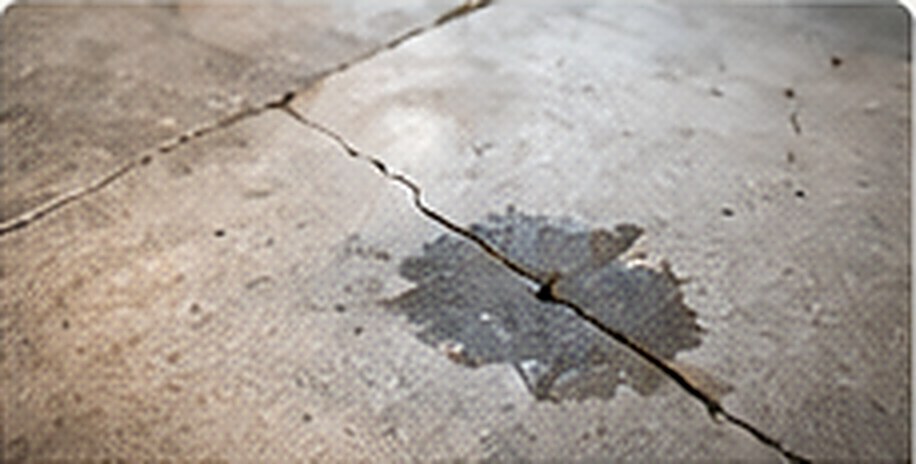
Read the pattern
- Damp area that slowly spreads, away from any fixture: a classic slab leak sign, especially with a higher water bill.
- Damp next to a shower or tub: more often a failed shower pan, grout, or drain, not the supply line under the slab.
- Damp only after rain: usually drainage or groundwater moving toward the foundation.
- Dry hairline cracks in tile or concrete: often normal shrinkage, or soil movement, rather than a leak.
- Cracks plus moisture plus a moving meter: treat as a possible slab leak.
Why cracks and leaks are linked on the Peninsula
The Palos Verdes Peninsula is known for expansive clay soils that swell when wet and shrink when dry, and some areas see slow ground movement. That movement can crack tile and slabs on its own. It can also stress the copper lines cast into the concrete, which is one reason slab leaks are common in older Rancho Palos Verdes homes.
A leak can make things worse: water saturating clay under the slab causes it to swell, which can lift or crack the floor above. That is why a crack that appears together with moisture deserves a prompt look.
Test before you guess
- Meter test: turn off all water and the irrigation, then watch the meter's leak indicator for 30 minutes. Movement means water is escaping.
- Isolate the house: close the main shut-off at the house. If the meter stops, the leak is inside or under the house.
- Isolate the hot side: close the water heater's cold-water inlet. If the meter stops, the leak is on a hot-water line.
- Mark and photograph the damp area with tape and a date, and check whether it grows over a few days.
If the meter never moves, the moisture is probably not from your supply lines. Look at drainage, the shower, or condensation from an air conditioning line instead.
Protect your floors while you sort it out
Water under hardwood leads to cupping and mold quickly, and carpet pad holds moisture. Lift rugs, run fans and a dehumidifier, and photograph everything for a possible insurance claim. Do not start breaking tile or concrete to look. A leak detection specialist can pinpoint the source so only a small area, or none, is opened.
Repair options that save your floor
If a slab leak is confirmed under tile, stone, or hardwood you want to keep, ask about a reroute. The leaking line is replaced through the walls or attic, and the floor is never opened. If the leak is under carpet or in a garage, a spot repair is often simplest. Compare both on total cost, including flooring, using the cost guide.
Common questions
Can a slab leak crack tile?
It can. Water saturating clay soil under the slab can make it swell, lifting and cracking tile. But many cracks come from normal shrinkage or soil movement, with no leak at all.
Why is my carpet damp with no leak in sight?
A slab leak, a shower or tub leak, drainage after rain, or condensation from an AC line are the usual causes. A water meter test helps tell plumbing leaks from the rest.
Are dark grout lines a sign of a slab leak?
Grout that stays dark in one area, away from showers and sinks, can mean moisture rising from the slab. It is worth a meter test.
Should I remove tile to look for the leak?
No. Have the leak located first. Professional detection can usually pinpoint it within a few feet, so only a small area, or nothing, needs to be opened.
Does homeowners insurance cover a damp floor from a slab leak?
Sudden water damage and the cost to access the leak are often covered, but the pipe repair usually is not. Report it promptly and document everything.